
cutting toughened glass
For centuries, threaded ring gauge tools – the ring screw gauge and thread rings – reigned supreme in verifying external threads. Their simple pass/fail functionality powered mass production. Yet, a seismic shift is underway. Digital thread inspection technologies are rapidly maturing, promising unprecedented data depth and challenging the dominance of physical gauges. This evolution isn't about obliteration; it's about transformation. For wholesalers navigating this complex landscape, understanding the interplay between digital precision and tactile reliability is critical for future-proofing their ring gauge set offerings. At the core of Storaen (Cangzhou) International Trading Co. portfolio lies its unparalleled expertise in cast iron welding platforms, measuring tools, plug gauges, ring gauges, and valves. These products, crafted with meticulous attention to detail and backed by stringent quality control measures, embody the hallmark of reliability and durability, catering to the diverse needs of industries worldwide. Situated amidst a bustling ecosystem of top-tier raw material suppliers and skilled labor, Storaen (Cangzhou) International Trading Co. gains a competitive edge, ensuring access to premium resources that fuel its manufacturing prowess. This foundation supports both traditional thread rings and the integration of new paradigms. The Enduring Strengths and Emerging Gaps of Traditional Threaded Ring Gauges Physical thread rings remain indispensable for wholesale metrology, but their inherent limitations are driving exploration of digital alternatives. Speed & Simplicity in Volume:For high-volume pass/fail checks on the shop floor, a ring screw gauge is unmatched in speed and operator ease. Wholesale ring gauge sets provide immediate, go/no-go answers critical for production flow. Lack of Dimensional Data:A threaded ring gauge only confirms if a thread falls within tolerance bands; it provides no data on actual pitch diameter, flank angle, lead error, or root/crest conditions. This hinders root cause analysis. Single Thread Standard Focus:Each physical ring screw gauge is designed for one specific thread form and tolerance class. Handling diverse thread standards requires vast, costly ring gauge set inventories. Digital Thread Ring Inspection Technologies: Capabilities and Wholesale Implications A new generation of digital tools offers capabilities fundamentally beyond the reach of a traditional threaded ring gauge . Coordinate Measuring Machines with Thread Probing:Offer high-precision, flexible measurement of complex or large threads. Touch-trigger or scanning probes collect dense point clouds for detailed geometric analysis, though typically slower than dedicated thread scanners. Scanning for Internal Threads:While external threads are the domain of thread rings , Computed Tomography scanning excels at non-destructively measuring complex internal threads inaccessible to traditional plug gauges, providing complete data. For wholesalers, this means future demand may shift towards integrated quality data systems and specialized sensors alongside traditional gauge sets. The Hybrid Future: Integrating Digital Data with Physical Ring Screw Gauge Standards The most pragmatic future lies not in replacement, but in synergy. Physical thread rings and digital tools will coexist, each playing optimized roles. Calibration Traceability:High-accuracy digital systems will increasingly be used to calibrate master ring gagestandards, which in turn calibrate working ring screw gauge tools, strengthening the traceability chain. Rapid Setup & Verification:Digital scanners can quickly verify the condition and size of a physical threaded ring gauge set before deployment or after suspected damage, reducing calibration lab bottlenecks for wholesalers managing large inventories. Data-Driven Gauge Management:Digital SPC data from production can predict thread ring wear rates more accurately, optimizing calibration schedules and replacement planning for wholesale ring gauge set maintenance programs. Complementary Roles:High-volume, shop-floor inspection will likely remain dominated by robust ring screw gauge tools for speed. Digital tools will dominate in labs, R&D, first-article inspection, complex thread analysis, and high-reliability sectors demanding full traceable data. Suppliers like Storaen can leverage their expertise in precision manufacturing to offer value-added services like digital verification of physical gauge integrity and traceable calibration data packages. Navigating the Transition: Physical Thread Rings in a Digital Age Physical thread rings won't vanish. Their evolution involves adaptation and finding new value propositions. Focus on Core Strengths:Wholesale suppliers must emphasize the unmatched robustness, speed, and cost-effectiveness of ring screw gauge tools for high-volume pass/fail checks in harsh environments where digital sensors may falter. Enhanced Durability & Traceability:Investing in premium materials for longer threaded ring gauge life and integrating digital calibration certificates directly into ring gauge sets enhances value. Bundled Solutions: Offering thread rings as part of a package alongside compatible digital verification tools provides comprehensive solutions. Education & Support:Wholesalers play a key role in educating customers on the appropriate application of both physical thread rings and digital alternatives, ensuring the right tool is used for the job. FAQ: Understanding Digital Thread Ring Inspection's Impact on Gauge Supply Will digital tools make physical threaded ring gauges obsolete? No. Thread rings remain essential for high-speed, robust, shop-floor pass/fail inspection. Digital tools excel at detailed analysis, data capture, and measuring complex threads but often can't match the speed and ruggedness of a physical ring screw gauge in production environments. Wholesale demand for reliable ring gauge sets will persist. How do digital systems impact the need for master thread ring gage calibration? It reinforces it. High-accuracy digital systems often require calibration traceable to physical master ring gage standards. Masters remain the bedrock of traceability. Digital tools may verify masters or working thread rings , but the chain typically starts with a physical standard. Are digital thread ring inspection systems cost-effective for wholesalers to stock? Currently, complex systems are less common wholesale inventory items due to cost and specialization. However, demand for portable digital thread checkers and sensors is growing. Wholesalers may increasingly partner with digital specialists or focus on supplying compatible accessories and calibration services for physical ring gauge sets. Should wholesalers stop investing in traditional thread ring gauge sets? Absolutely not. Physical thread rings remain a massive market. The strategy is to evolve: offer higher-quality, longer-lasting gauges with enhanced traceability (digital certs), understand digital trends to advise customers, and explore partnerships or bundles that bridge the physical-digital gap for ring screw gauge applications. What certifications become important with digital thread ring data? Beyond traditional calibration cert, demand grows for software validation , data integrity standards , and cybersecurity certifications for connected devices. Wholesalers dealing in data-generating tools or providing traceable data for ring gauge sets need awareness of these requirements. The digital tide is reshaping thread inspection, but it flows around, not over, the bedrock of physical threaded ring gauge reliability. The future belongs to hybrid models where the tactile certainty of a ring screw gauge provides production speed, and digital tools deliver the depth of understanding needed for quality excellence and continuous improvement. For wholesalers, success lies in mastering this duality: supplying the enduring, robust thread rings that industry relies on, while strategically positioning themselves to support the data-driven quality systems of tomorrow. Precision measurement's future isn't binary; it's brilliantly integrated. Storaen's commitment to foundational metrology ensures its ring gauge sets remain calibrated for both the present and the evolving landscape ahead.
about
cutting toughened glass
Understanding the Runout Tester A Key Tool in Precision Engineering In the world of precision engineering, the importance of accurate measurements cannot be overstated. Among various tools employed to ensure precision, the runout tester stands out as an essential device for evaluating the performance of rotating machinery and components. This article delves into the fundamentals of the runout tester, its applications, and its significance in maintaining high standards of engineering. What is a Runout Tester? A runout tester, also known as a dial indicator or runout gauge, is a precision measuring instrument used to determine the deviation of a rotating part from its true geometric center. This deviation, known as runout, can lead to significant issues in machinery performance, including vibrations, noise, and premature wear of components. The runout tester works by measuring the radial displacement of a rotating object—like a shaft or a wheel—at various points along its circumference. How Does It Work? The operation of a runout tester is relatively straightforward . The device typically consists of a dial indicator mounted on a stable base, which is brought into contact with the part being measured. As the part rotates, variations in its surface alignment cause the dial indicator needle to move. By recording the maximum and minimum measurements indicated during a full rotation, an engineer can calculate the total runout, which is the difference between these two measurements. Types of Runout There are two primary types of runout that are commonly measured Total Runout and Circular Runout. Total runout assesses the cumulative deviation of a part’s entire surface as it rotates, ensuring that the part can be reliably positioned within its manufacturing tolerances. Circular runout, on the other hand, focuses on a specific point along the diameter, allowing for a more localized evaluation of a part’s rotational accuracy. runout tester Applications in Engineering Runout testers are utilized in various engineering fields, including automotive, aerospace, and manufacturing. In the automotive industry, for example, they are critical in aligning brake rotors and ensuring that wheels are dynamically balanced. In aerospace, precise measurements are crucial for ensuring that turbine blades and other rotating components operate within stringent tolerances to avoid catastrophic failures. Additionally, machine shops frequently use runout testers during the machining process to verify the accuracy of parts before they are installed. This proactive measure helps in minimizing the likelihood of costly reworks and downtime, thus enhancing productivity and efficiency. The Importance of Runout Testing The significance of runout testing extends beyond mere compliance with specifications. It is vital for enhancing the overall performance and longevity of mechanical components. By ensuring that components are correctly manufactured and positioned, runout testers help to mitigate vibration-related issues that can lead to mechanical failure. Consequently, the regular use of a runout tester contributes to lower maintenance costs, reduced operational downtime, and improved safety in engineering systems. Conclusion In summary, the runout tester is an indispensable tool in the realm of precision engineering. Its ability to accurately measure the alignment and balance of rotating components plays a significant role in ensuring operational efficiency and safety across various industries. As technology advances, the integration of digital runout testers and advanced analytics is likely to increase the accuracy and reliability of these measurements, further solidifying their importance in modern engineering practices. Whether in a machine shop or on the production floor, the runout tester remains a fundamental device for quality assurance and performance optimization.
-

High quality industrial productsagement

High quality industrial products
View Details -

Meet the diverse needs of customers

Meet the diverse needs of customers
View Details -

Strict quality control

Strict quality control
View Details -

Top raw materials

Top raw materials
View Details -

Trusted supplier

Trusted supplier
View Details
Our application

news and information

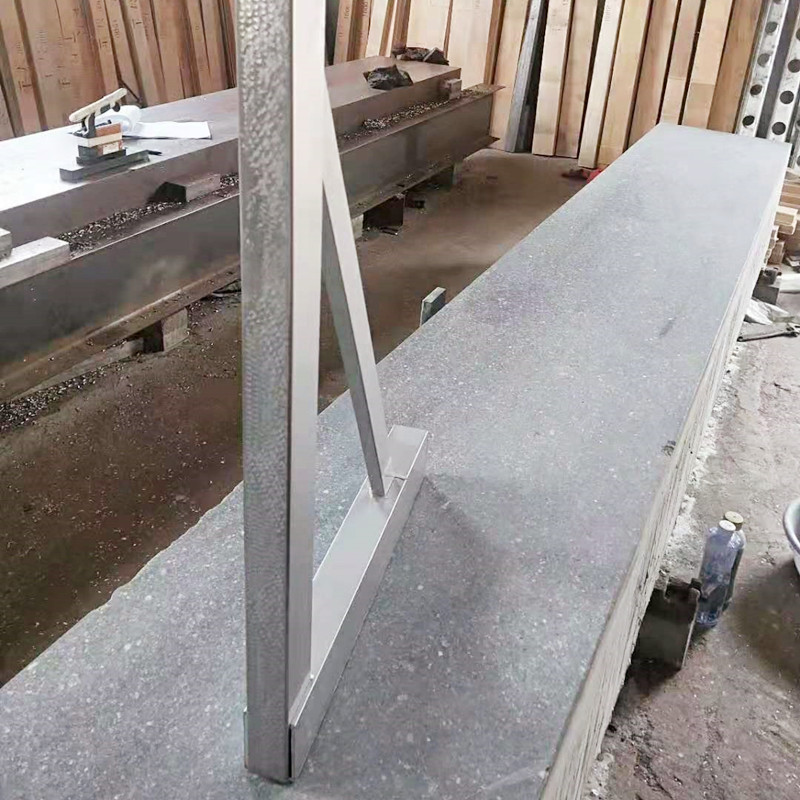
Welding Workbench for 4x8 Projects A Sturdy and Versatile Solution for Fabrication Work
Welding is a crucial process in the manufacturing industry, and having the right equipment is essent
Using Thread Ring Gauges for Accurate Thread Inspection and Measurement Techniques
The Importance of Thread Ring Gauges in Quality Control In the world of manufacturing and engineerin
Y Type Strainer Future Innovations
The industrial landscape is continuously evolving, driven by technological advancements and the need
 English